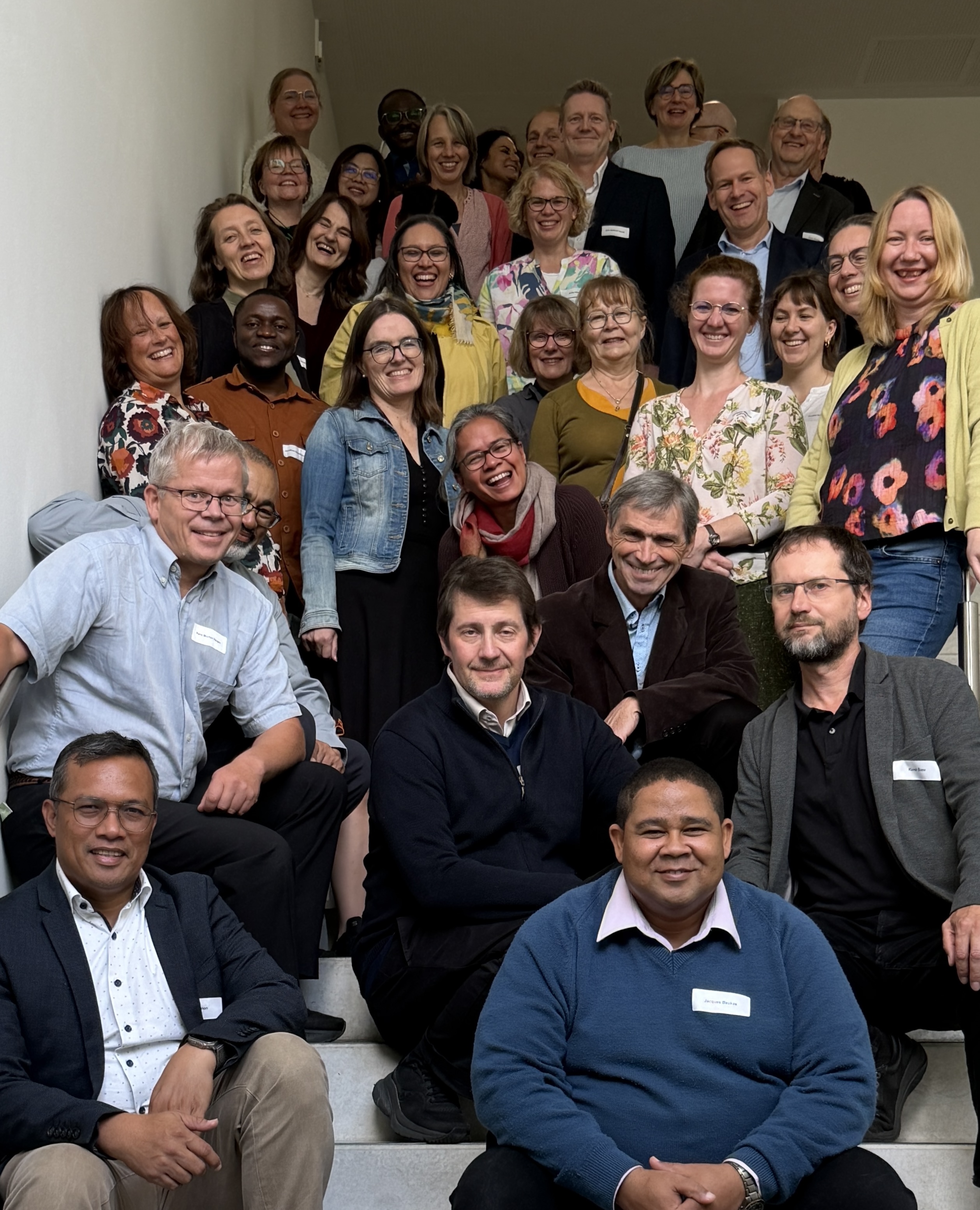
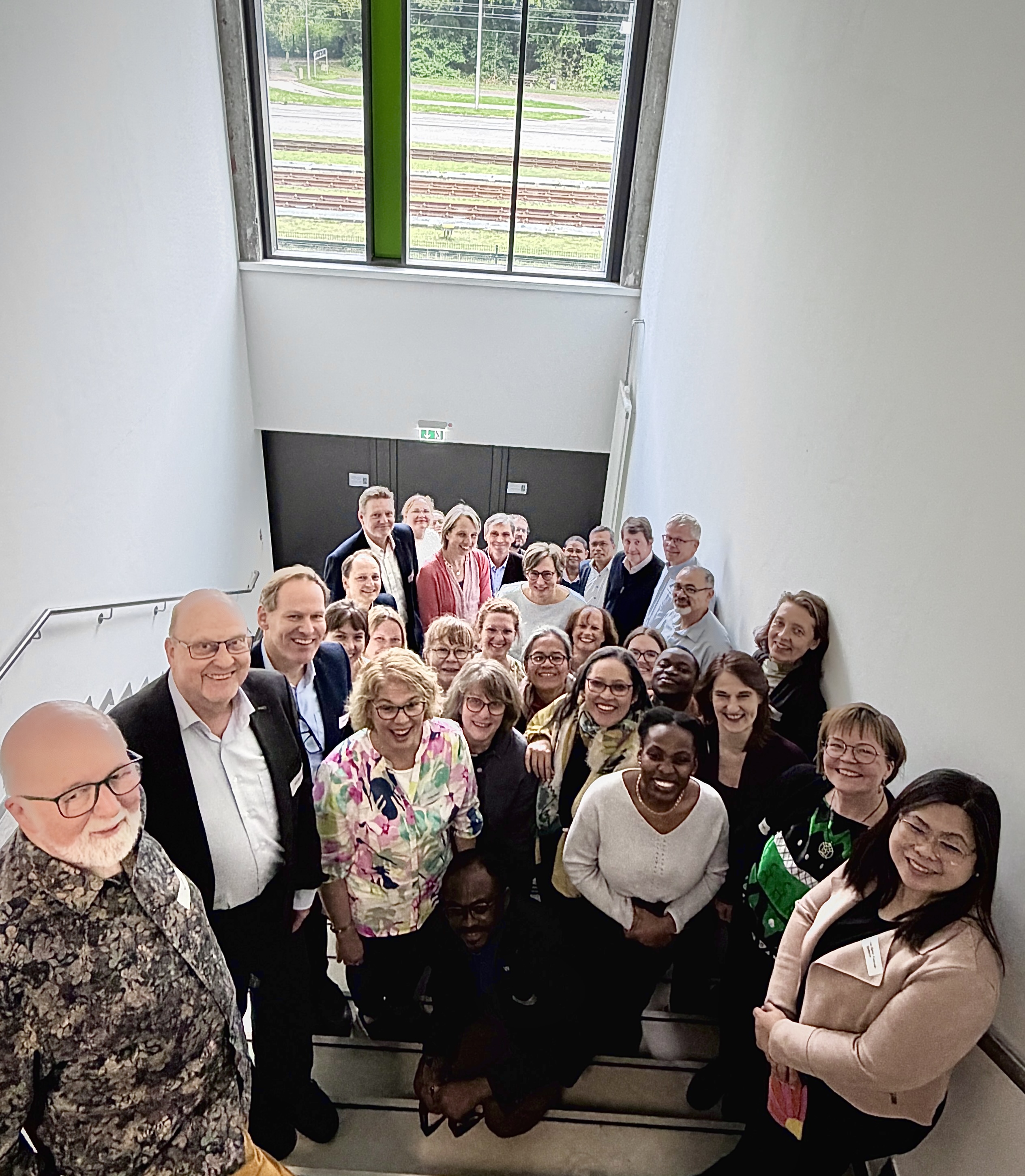
The CODE Forum brings together researchers and practitioners working on community development, diakonia and Christian social practice. It is an international thematic group linked to ReDi, the International Society for the Research and Study of Diakonia and Christian Social Practice. This year the forum met at the invitation of IDWM at Bielefeld University, under the title "Between Solidarity and Division: Diaconal Community Development and Christian Social Practice in a Time of Polarisation". Participants came from Norway, Finland, Sweden, Iceland, the Netherlands, the United Kingdom, Czechia, Austria, Ukraine, South Africa, Malawi, Ghana, DR Congo, the Philippines, Indonesia, India and Germany.
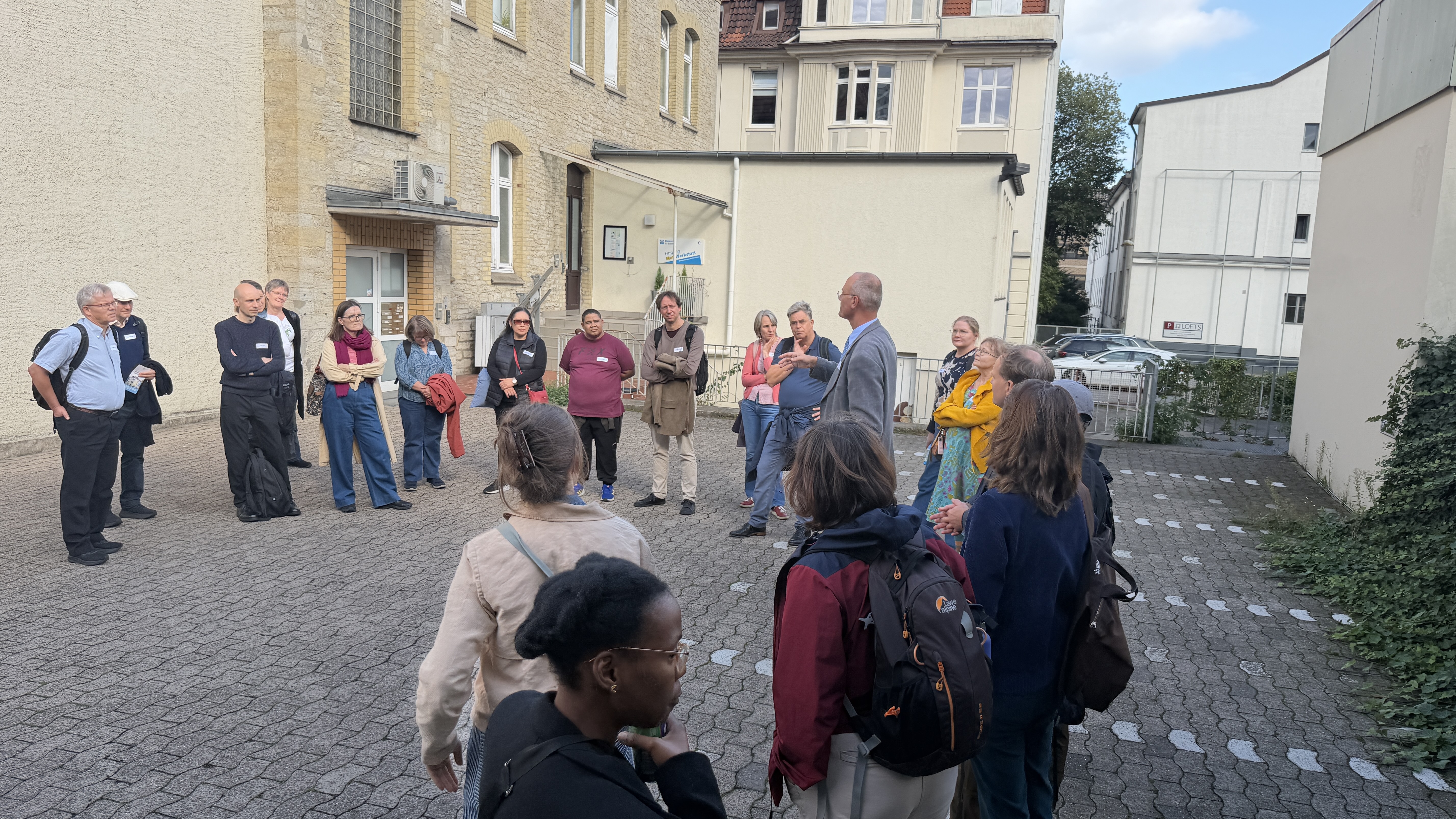
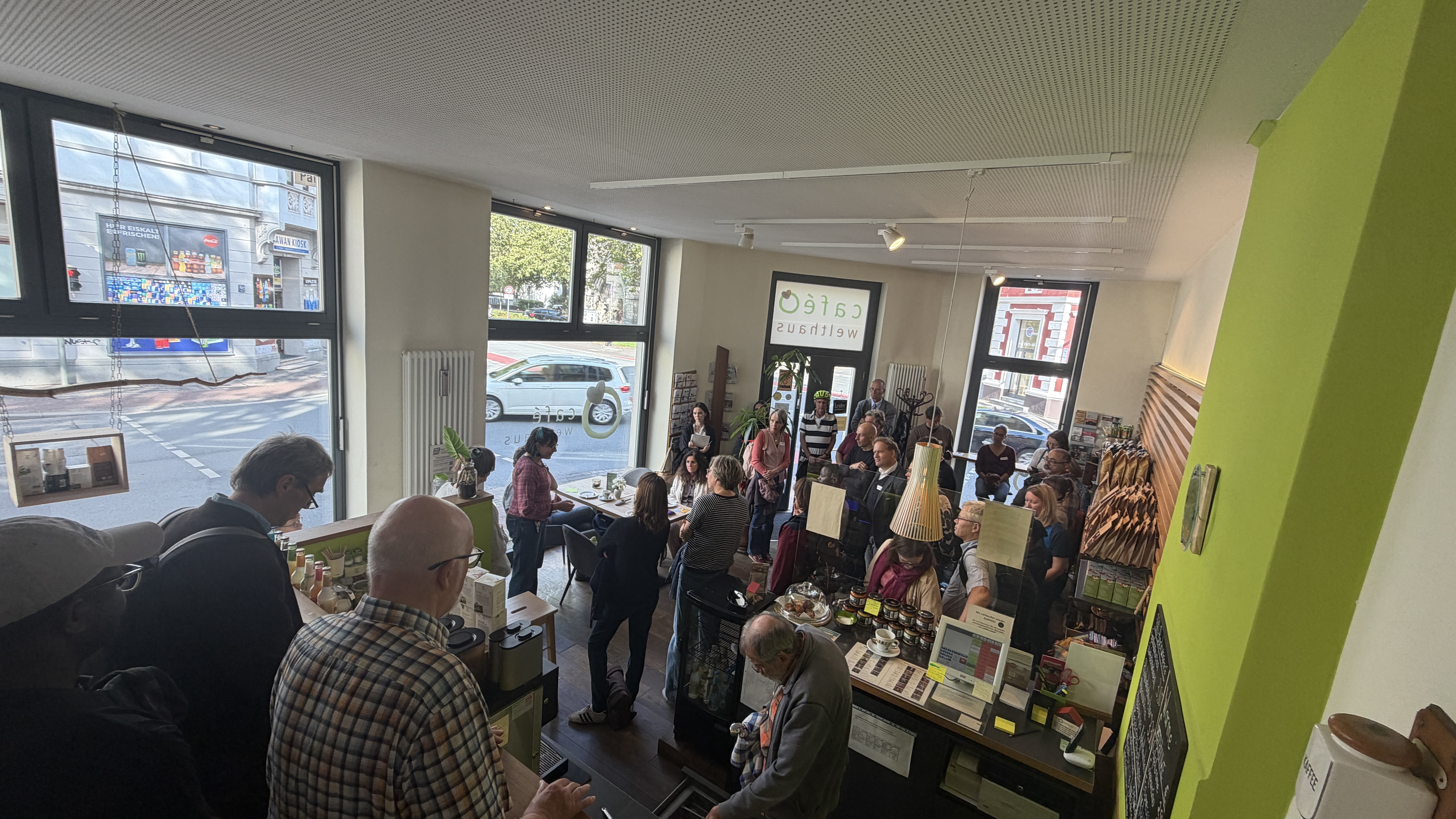
Bielefeld from a diaconal perspective.
The forum began on Wednesday with a walking seminar through Bielefeld, led by Rev. Ingo Stucke, Social Pastor of the Protestant Church District of Bielefeld. Its aim was to explore the social realities of the city from a diaconal and socio-spatial perspective, at places where participation, exclusion and community in a diverse urban society become visible. The route led past, among others, the station mission, places where people without a home of their own spend their days, the Welthaus, a tailoring workshop where people from the neighbourhood sew and learn to sew together, and a congregation that sold its buildings and opened its church as a meeting place for the district.
Diaconia in response to crisis and polarisation
On Thursday, Anika Albert and Christian Oelschlägel welcomed the participants on behalf of the IDWM and Bielefeld University. Contributions then addressed the role of diaconia in situations of war and frozen conflict, climate stress and marginalised youth, human dignity as a foundation of diaconal practice, food sharing and food justice, and the place of congregations in caring cities. A second strand dealt with leadership, organisational innovation and locally led development in faith-based organisations.
Keynotes on compassion and land rights
Friday opened with two keynote lectures. Prof. Dr. Nadine Bowers Du Toit (Stellenbosch University) examined the rise of right-wing religious discourse that recasts compassion as "toxic empathy", and discussed its consequences for development and diaconal practice at a time of cuts in global development funding. Line Merethe Skum (VID Specialized University, Tromsø) presented a case study on a graphite mining project in a Sámi reindeer herding area in Northern Norway and the gap between formal commitments to Indigenous rights and their implementation, asking what justice in diaconal practice means where land rights remain unresolved.
Modern slavery and diaconal identity
The new CODE Forum volume "Diakonia & Modern Slavery" was presented on Friday, together with papers on the continuity between colonial and modern slavery and on faith-based responses to trafficking. Parallel sessions and a workshop explored diaconal identity in multifaith and secular contexts: how diaconal organisations remain recognisable while staying open, how equal partnership can be achieved in work linked to migration, and how reflective learning can support diaconal work with refugees and asylum seekers. The closing plenary brought these perspectives together and identified issues for follow-up.
Looking ahead
On Saturday, a planning workshop discussed the aims, structure and future projects of the CODE Forum, including webinars, publications and joint research. It became clear that the forum will continue to serve as a bridge between research and practice. As host, IDWM was glad to offer the forum a place in Bielefeld, a city with a strong tradition of diaconal work and research, and will gladly continue to support the CODE Forum in the years ahead.
Across its wide range of topics, the forum was marked by respectful dialogue and a shared commitment to fostering social change and improving the lives of people and groups experiencing or at risk of marginalisation. The conference encouraged reflection while also opening up concrete possibilities for action in participants’ own practice.
We thank everyone who contributed to the forum, in particular Tony Addy for the initiative and coordination of the programme, and all local partners and participants who brought their knowledge, experience and questions to Bielefeld!